After the Applause Fades: The Strange Grief of a Finished Creative Project
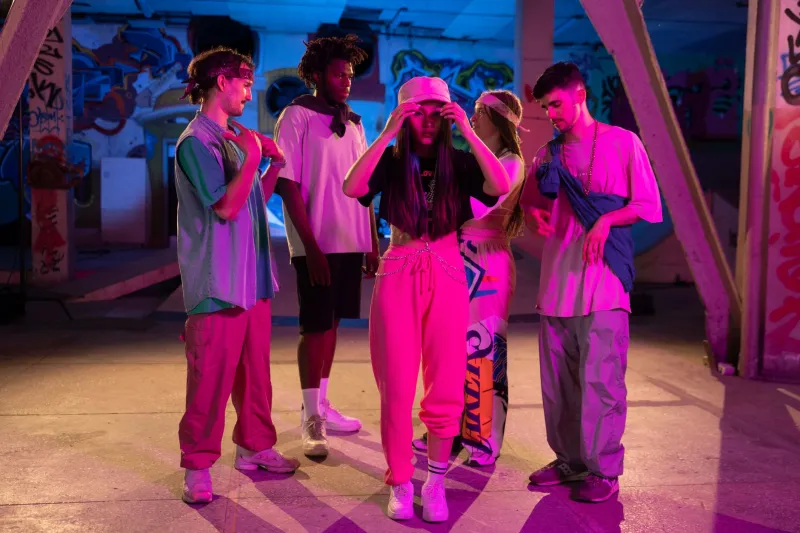
The mural went up in October. Twelve artists, six months of planning, three weekends of actual painting, and one genuinely electric block party to celebrate the unveiling. By November, the group chat had gone quiet. By December, two of the collaborators had stopped responding to messages altogether. By January, the project lead — a muralist named Deja from Tucson — described herself as feeling "hollowed out."
"It was the best thing I'd ever been part of," she said. "And then it was just... over. And I didn't know what to do with myself."
If you've ever thrown yourself into a collaborative creative project — a community mural, a zine collective, a pop-up performance series, a neighborhood sound installation — and walked away from its conclusion feeling inexplicably lost, you're not broken. You're experiencing something a lot of artists quietly go through and almost never talk about. Call it the collaboration hangover. Call it post-project grief. Whatever you name it, it's real, and it deserves more than a shrug.
The High You Didn't Know You Were Riding
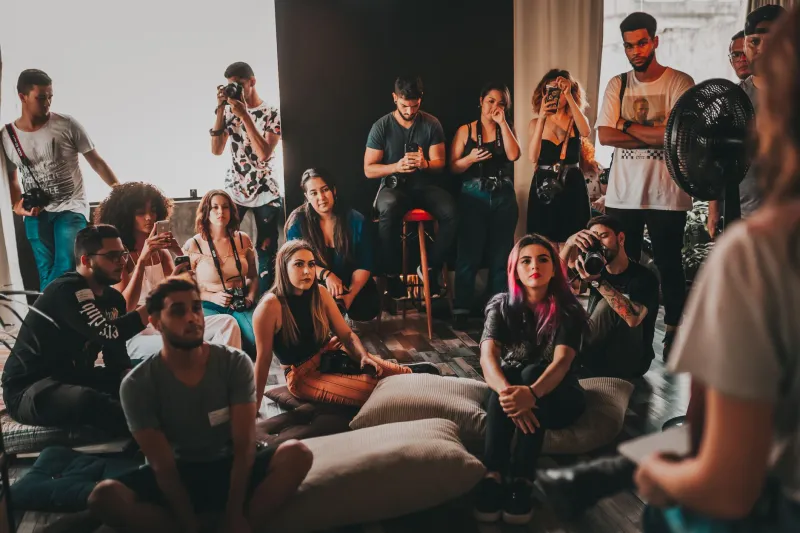
Here's what happens during an intense creative collaboration: your nervous system basically throws a party. You're co-creating meaning with other people. You're solving problems in real time. You're experiencing what psychologists sometimes call "creative flow" — but in its communal form, which carries an extra layer of social bonding chemicals on top of the already intoxicating rush of making something.
Marco, a Chicago-based composer who co-wrote a community opera with a neighborhood theater collective, put it plainly: "We rehearsed together three times a week for four months. We cried together. We fought about tempo. We ordered the same bad Thai food every Thursday. And then the run ended, and I genuinely didn't know what to do with a Tuesday night."
The project becomes a container — for your creativity, your identity, your social life, sometimes even your sense of purpose. When the container disappears, the contents don't just neatly reorganize themselves somewhere else. They spill.
Why Collectives Are Especially Vulnerable
Solo artists deal with project endings too, obviously. But collaborative groups face a particular kind of disorientation because the loss isn't just creative — it's relational. The work and the people become fused in your memory and your emotional life. When the project wraps, you don't just lose the creative outlet. You lose the specific version of your relationships that existed inside that project.
A lot of collectives are built around a single initiative. That's not inherently wrong — sometimes a great idea is a great idea and that's enough. But when the organizational identity lives entirely inside one project, there's nothing structural left to hold people together once it concludes.
Tanya, who runs a small textile arts collective in Richmond, Virginia, watched her group nearly dissolve after completing a year-long public installation. "We had been so focused on the deadline that we never talked about what came next. The project ended and suddenly we were just... people who used to make something together. Nobody knew how to be that."
The Myth of Natural Momentum
One of the most persistent and damaging myths in creative community spaces is that good collaborations naturally continue. That if the chemistry is right, the relationships will sustain themselves. That you don't need to be intentional about maintenance because the energy of the work will carry you through.
It won't. Not reliably. Not for most people.
Relationships built inside intense creative pressure are real and meaningful, but they were also shaped by specific conditions — shared deadlines, shared stakes, shared physical space. Remove those conditions and the relationship has to find a new form, which takes actual effort and, often, an explicit conversation that most artists find deeply uncomfortable to initiate.
"Nobody wants to be the person who says 'so, are we still a thing?'" said Marco. "It feels needy. It feels like you're admitting you don't have enough going on. But someone has to say it, or you just drift."
What Actually Helps
So what does it look like when collectives handle this well? A few patterns show up consistently.
Build a debrief into the project itself. Not just a celebration — a genuine conversation about what the group wants to do with the relationships it built. Some collectives schedule this as a formal meeting. Others do it more casually over dinner. The format matters less than the fact that it happens before everyone disperses back into their separate lives.
Separate the people from the project. This sounds obvious but it's actually a subtle shift in framing. Instead of "we're the group that made X," try "we're people who make things together, and X was one of those things." That reframe opens up the possibility of future work without requiring you to replicate the original project.
Give the grief some air. Deja eventually organized an informal gathering — just coffee and a walk around the mural — for the artists about two months after the project wrapped. "I just said, 'I miss you all and I miss what we made, and I thought maybe you did too.'" Several people cried. Several people admitted they'd been feeling weird and hadn't known why. The acknowledgment itself did something.
Keep something low-stakes going. Not every post-project touchpoint needs to be a new major initiative. A monthly studio visit rotation. A shared playlist. A group that meets to critique each other's solo work. Small, consistent contact is often more sustainable than trying to immediately replicate the intensity of the original collaboration.
The Void Is Information
Here's the thing about the hollow feeling that follows a finished project: it's not nothing. It's data. It's telling you that what you built mattered — to your creative life, to your sense of community, to your understanding of what making art with other people can feel like.
The grief is proportional to the meaning. And meaning is worth grieving.
But it's also worth building on. The artists who seem to navigate post-project loss the best aren't the ones who avoid the feeling — they're the ones who let it point them toward what they actually want more of. More collaboration. More community. More of that particular aliveness that comes from making something with other people.
The project ended. The people are still here. That's not nothing. That's, actually, everything you need to start the next thing — whenever you're ready.
Have you navigated the emotional aftermath of a finished collaborative project? We'd love to hear how your collective handled it. Reach out at flatbaycollective.org or find us on social.