Better Together: What Happens When Artists Stop Working in Separate Rooms
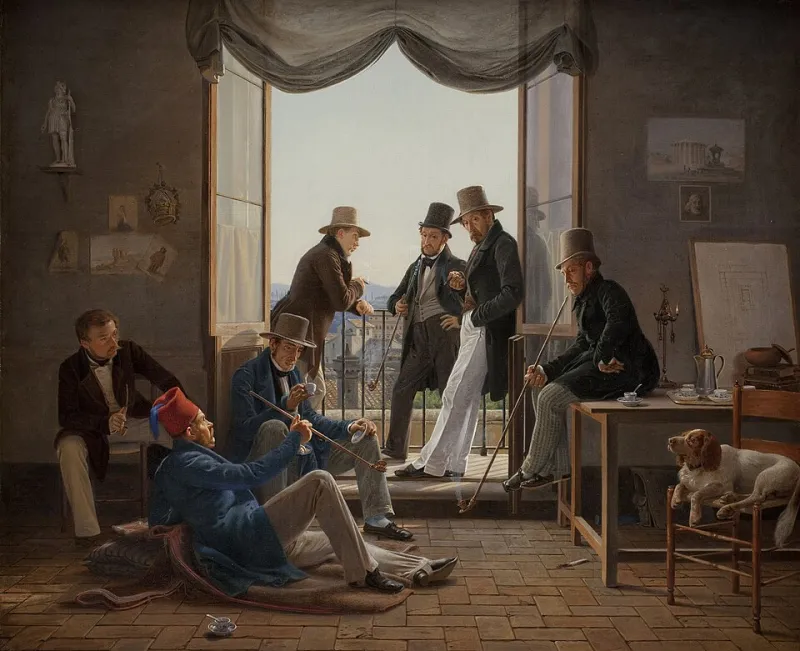
Photo: Constantin Hansen, CC0, via Wikimedia Commons
There's a particular kind of creative loneliness that most artists know intimately. You're in your studio, your practice room, your corner of a shared warehouse — and you're grinding away at your craft with the people who already speak your language. Painters talk to painters. Beatmakers talk to beatmakers. It makes sense. It's comfortable. And according to a growing number of artists across the US, it's also quietly killing the most interesting work you could be making.
Cross-discipline collaboration — the messy, sometimes uncomfortable, often revelatory act of making work with artists from completely different backgrounds — is having a real moment. Not in the corporate "synergy" sense, but in the grassroots, figure-it-out-as-you-go way that community collectives have always done their best work.
The Friction Is the Point
Ask anyone who's done it and they'll tell you: the hardest part isn't the logistics. It's the vocabulary problem. A choreographer thinking about negative space and a visual artist thinking about negative space are often talking about completely different things. A musician's understanding of "rhythm" can feel almost alien to a spoken word poet who's been building cadence through syllables their whole career.
But here's what's wild — that gap is exactly where the good stuff lives.
Take the experience of collectives like those popping up in mid-sized American cities, from Richmond to Tucson to Akron. Many of them started as loose gatherings of people who just happened to rent studio space in the same building. A dancer shows up to watch a friend record. A muralist gets dragged to an improv show. Someone says, "Hey, what if we actually tried to make something together?" And then things get interesting.
One collective member we spoke with — a jazz guitarist who started collaborating with a textile artist after they shared a booth at a local market — described their first session as "genuinely confusing and kind of amazing." She was used to thinking about her music as complete in itself. Her collaborator kept asking questions like, "What does this chord feel like to touch?" It sounded absurd at first. Six months later, they'd created an installation that invited visitors to handle handwoven pieces while listening to compositions built around the textures of those same materials. The work toured three regional arts festivals.
Why Musicians Genuinely Need Dancers (And Vice Versa)
Here's something that keeps coming up in these conversations: musicians often have a complicated relationship with their own bodies. They're trained to listen, to feel rhythm internally, but performance can become almost disembodied over time. When dancers enter the room, everything shifts. Suddenly the music is something that moves through space, not just through time. The tempo isn't just a number — it's a physical negotiation.
Choreographers, for their part, frequently describe working with live musicians as "terrifying and completely necessary." Recorded music is predictable. A live musician responds to the room, to the energy, to what the dancers are doing. That responsiveness forces choreography to stay alive in a way that a fixed playlist simply can't.
And visual artists? They tend to describe both musicians and dancers as people who "work in time" — something painters and sculptors often feel they're missing. Introducing a temporal element into a visual practice, whether that's a soundtrack that shifts as you move through an installation or a dancer who interacts with a sculpture in real time, changes how audiences experience the static work entirely.
Getting Started Without Getting Overwhelmed
If you're intrigued but not sure how to actually make this happen in your own community, a few things seem to work consistently well.
Start with a shared question, not a shared project. Instead of saying "let's make something together," try gathering around a prompt. What does grief look like? What does your neighborhood sound like at 3am? A shared inquiry gives everyone a point of entry without requiring anyone to immediately abandon their own practice.
Build in time to just hang out. Some of the most successful cross-discipline collaborations started with people spending time in each other's creative spaces without any agenda. Watch a rehearsal. Sit in on a studio session. Let the other person's process become familiar before you try to merge with it.
Embrace the awkward middle phase. Almost every artist who's done this work describes a period somewhere in the middle where everything feels wrong and nothing is cohering. This is apparently normal. The collectives that push through it are the ones that end up with something genuinely new.
Keep the power dynamics honest. Cross-discipline work can accidentally replicate the same hierarchies that exist in the broader art world — visual art getting more prestige, certain disciplines getting more resources. Name it early. Build structures that distribute credit and compensation equitably.
What It Produces
The results of this kind of work are hard to categorize, which is arguably the whole point. They don't fit neatly into a gallery show or a concert or a dance performance. They require new language, new venues, new ways of talking about what art even is.
For community collectives, that's not a bug — it's a feature. When your work doesn't fit the existing boxes, you get to build new ones. And when you build those new containers collaboratively, with people who see the world through completely different creative lenses, you end up with something that reflects the actual complexity and richness of the communities you're part of.
The artists who are doing this work aren't abandoning their individual practices. They're expanding them. They're coming back to their solo work with new questions, new tools, new ways of seeing what they've always been doing.
That's what happens when artists stop working in separate rooms. The walls come down, and the work gets bigger than any one of them could've imagined.
Interested in connecting with cross-discipline collaborators in your area? Check out our Community Spotlight series for more stories about collectives doing this work across the country.