How to Actually Get Your Neighbors to Make Art Together: 5 Strategies That Work
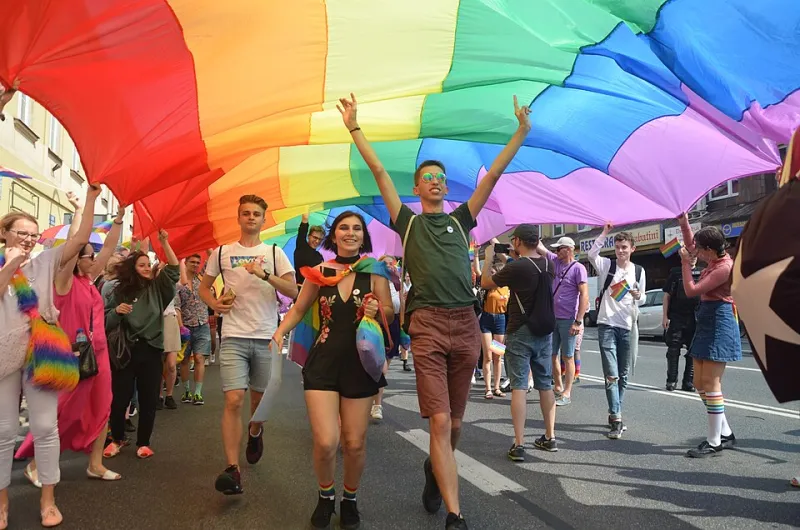
Photo: Silar, CC BY-SA 4.0, via Wikimedia Commons
Let's Be Honest About Why Community Art Projects Fail
Here's the thing nobody puts in the grant proposal: getting a community to co-create something is messy. People are busy. Opinions conflict. The person who was most excited in the planning meeting goes radio silent when it's time to actually show up. Funding falls through in week three. Someone's cousin thinks the mural design is offensive and now there's a whole thing.
None of that means you shouldn't try. It means you should go in prepared.
At Flat Bay Collective, we've watched a lot of community creative projects unfold — some that became genuine neighborhood landmarks, and some that quietly faded out after the first planning session. The difference, almost every time, wasn't budget or talent. It was process. So here are five strategies that actually work, pulled from real projects and the organizers who ran them.
1. Start With a Listening Session, Not a Pitch
The most common mistake new project leaders make is coming to the community with a fully formed idea and asking people to sign on. That's not co-creation — that's recruitment. And people can feel the difference.
Instead, start with a genuine listening session. This can be as casual as a potluck in someone's backyard or as structured as a facilitated community meeting. The goal is simple: ask people what they wish existed in their neighborhood, what stories they think aren't being told, what spaces feel neglected or unloved. Then listen without defending or redirecting.
The Mural Arts Philadelphia program, one of the country's most respected community art initiatives, has built its entire model around this principle. Before a single sketch gets made, artists spend time in the neighborhood — talking to residents, learning the history, understanding what the community actually wants to see on their walls. The result is murals that feel like they belong, because they do.
Practical tip: Record the session (with permission) and create a simple one-pager summarizing what you heard. Share it back with participants before moving forward. This step alone builds enormous trust.
2. Design for Participation at Every Skill Level
One of the fastest ways to kill a community creative project is to make it feel like only "real artists" are welcome. The moment someone thinks "I'm not creative enough for this," you've lost them — and probably their whole social circle.
The best community art projects are intentionally layered. There are high-skill roles for experienced artists who want creative ownership. There are medium-skill roles for people who want to learn something new. And there are zero-skill roles — mixing paint, cutting fabric, handing out flyers, bringing snacks — that are genuinely important and make people feel like they contributed.
A great example of this in action is the annual "Sidewalk Stories" chalk festival in several Midwestern cities, where professional chalk artists work alongside neighborhood kids and seniors. Everyone gets a square of pavement and a set of chalk. The results are wildly uneven, and that's entirely the point. The joy is in the participation, not the polish.
When you're planning your project, map out at least three tiers of involvement and make sure all of them are communicated clearly in your outreach.
3. Solve the Scheduling Problem Before It Solves You
Scheduling is where community projects go to die. Everyone's available "most weekends" until they're not, and suddenly your core group of twelve has become a rotating cast of three.
The fix isn't to find a perfect time — that doesn't exist. The fix is to create a project structure that doesn't require everyone to be there at once. Think modular: design your project so that different components can be worked on independently, at different times, and later assembled into a whole.
A community quilt project is a classic example. Participants make their individual squares on their own schedule, and the final assembly becomes a celebration event rather than a logistical bottleneck. The same principle works for zine collections, collaborative murals with assignable sections, community soundscape recordings, and neighborhood photo archives.
Also worth considering: offer at least two or three different time slots for any in-person work sessions, including at least one weekend morning and one weekday evening. And always, always send a reminder 48 hours before.
4. Build In a Feedback Loop (And Actually Use It)
Community projects that go sideways often do so because someone's concerns weren't heard early enough. Maybe a participating artist felt their vision was being overridden. Maybe a neighborhood stakeholder felt excluded from decisions. Maybe the project evolved in a direction that no longer reflected what the community asked for in the first place.
A simple, consistent feedback loop prevents most of this. This doesn't have to be complicated — a brief check-in survey after each major milestone, an open comment channel in whatever group chat you're using, or even a physical "feedback wall" at your project space where people can post notes anonymously.
The key is that feedback has to visibly change something. If people share concerns and nothing shifts, they'll stop sharing — and start quietly disengaging. Even a small acknowledgment ("We heard that the timeline felt rushed, so we're adding an extra work session") signals that the process is genuinely collaborative.
5. Measure What Actually Matters
Funders love numbers. How many participants? How many hours? How many square feet of mural? These metrics have their place, but they don't tell you whether your project actually did anything meaningful for the community.
The most effective community art organizers we've talked to track a different set of outcomes: Did participants report feeling more connected to their neighbors? Did the project surface stories or histories that weren't being told? Did it bring in people who don't usually engage with arts programming? Did it create relationships that outlasted the project itself?
You can measure these things — not perfectly, but meaningfully. Short pre-and-post surveys, follow-up conversations three months after the project wraps, tracking whether participants come back for the next project. Over time, this kind of qualitative data builds a picture of genuine community impact that's far more compelling than a headcount.
The Real Goal Is What Comes After
Here's the thing about a well-run community art project: the artwork is almost secondary. What you're really building is trust, connection, and a shared sense of ownership over the culture of a place. The mural fades. The zine goes out of print. But the neighbor who showed up to mix paint and ended up staying for three hours talking to someone they'd never met before — that sticks.
That's what we're here for at Flat Bay Collective. Not just the finished piece, but everything that happens in the making of it.