Seven Tiny Events That Grew Up to Be Cultural Landmarks
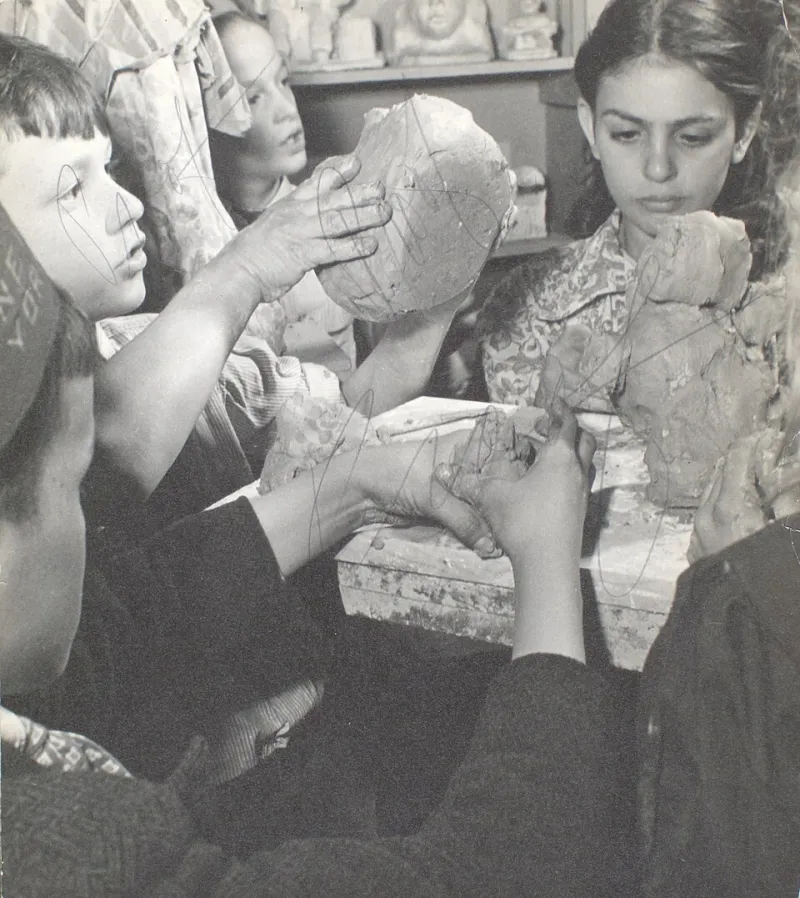
Photo: Berenice Abbott, Public domain, via Wikimedia Commons
Every big community art event you've ever admired was once a somebody's half-formed idea that barely survived its first night. The festival with 40,000 attendees? Started with a folding table and a clipboard. The beloved monthly art walk? One bar owner saying "fine, hang them up" to a painter who wouldn't leave.
We looked at how small events across the US actually grew — not the polished versions from their websites, but the messy origin stories — and found seven worth learning from.
1. The Porch Concert That Became a Citywide Series
Somewhere in the American heartland, a musician annoyed that her living room couldn't fit her audience dragged an amp onto the front porch. Neighbors brought lawn chairs. A year later, the whole street coordinated dates; five years later, the city was closing blocks for it.
The early decision that mattered: zero barrier to entry. No tickets, no lineup politics, no sound permits fought in year one. The event belonged to whoever showed up.
Steal this: Make your first event so easy to attend that attendance is the default.
2. The Library Craft Night That Outgrew the Library
A librarian with a closet full of leftover yarn started a Thursday drop-in. No instruction, no registration, just tables and supplies. Retirees came, then parents, then teens who heard there was free stuff and no judgment. When attendance outgrew the meeting room, a local makerspace offered its floor — and a partnership was born.
The early decision that mattered: no formal teaching. Peer learning kept it social instead of instructional, which kept people coming back.
Steal this: Structure is a feature you add later. Early on, it's a bug.
3. The One-Wall Gallery in a Laundromat
A photographer got rejected from every gallery in town, so he asked the owner of the 24-hour laundromat if he could hang eight prints above the folding tables. People stared at art for 35 minutes at a time. Other businesses asked to participate. Within two years, a dozen laundromats and diners made up a distributed gallery crawl.
The early decision that mattered: meeting people where they already were instead of asking them to come to art.
Steal this: Your venue doesn't need to be a venue.
4. The Potluck That Became a Film Festival
A film buff in a small town couldn't afford a festival, so she hosted a dinner where everyone brought a short film on a laptop. The format stuck — food plus films plus arguing about them afterward. Local sponsors eventually materialized, drawn by the crowd the potluck had already built.
The early decision that mattered: she built the audience before asking anyone for money.
Steal this: Prove demand first. Funding follows eyeballs, not the other way around.
5. The Murals Program That Started With Permission Slips
A teacher got a property owner to say yes to one wall and a bucket of paint. Kids showed up. Business owners watched, then asked. The program's growth came almost entirely from visible success — each finished wall was its own advertisement.
The early decision that mattered: one documented win. Photos of that first mural did more fundraising than any grant application.
Steal this: Finish something photogenic, then let it do your marketing.
6. The Open Mic That Fed People First
A café owner noticed that open mics died when the room felt cold. So hers came with soup. Cheap, good, mandatory-feeling soup. Performers stayed, audiences stayed, and the night became the town's de facto social event.
The early decision that mattered: treating hospitality as programming.
Steal this: Feed people. It's the oldest trick in community-building and it still works.
7. The Neighborhood Zine That Refused to Go Digital
A group of friends photocopied their writing and left copies in barbershops and bus stops. No website, no social media — the print-only constraint became the identity. People started submitting just to see their work somewhere physical. Distribution points multiplied; the zine became a chronicle of the neighborhood itself.
The early decision that mattered: a constraint that made the thing feel special. Scarcity did the marketing.
Steal this: Decide what your event will not do, and let that shape everything.
The Common Thread
Across all seven: the founders optimized for showing up, not for scale. They made the first event easy to attend, easy to participate in, and easy to remember. Growth was a side effect of people telling other people.
If you're sitting on a micro-event idea, the lesson isn't to plan bigger. It's to plan sooner and smaller — and to let the community surprise you with what it wants to become.