Stuck in the Middle: The Financial Purgatory Swallowing Mid-Size Artist Collectives Whole
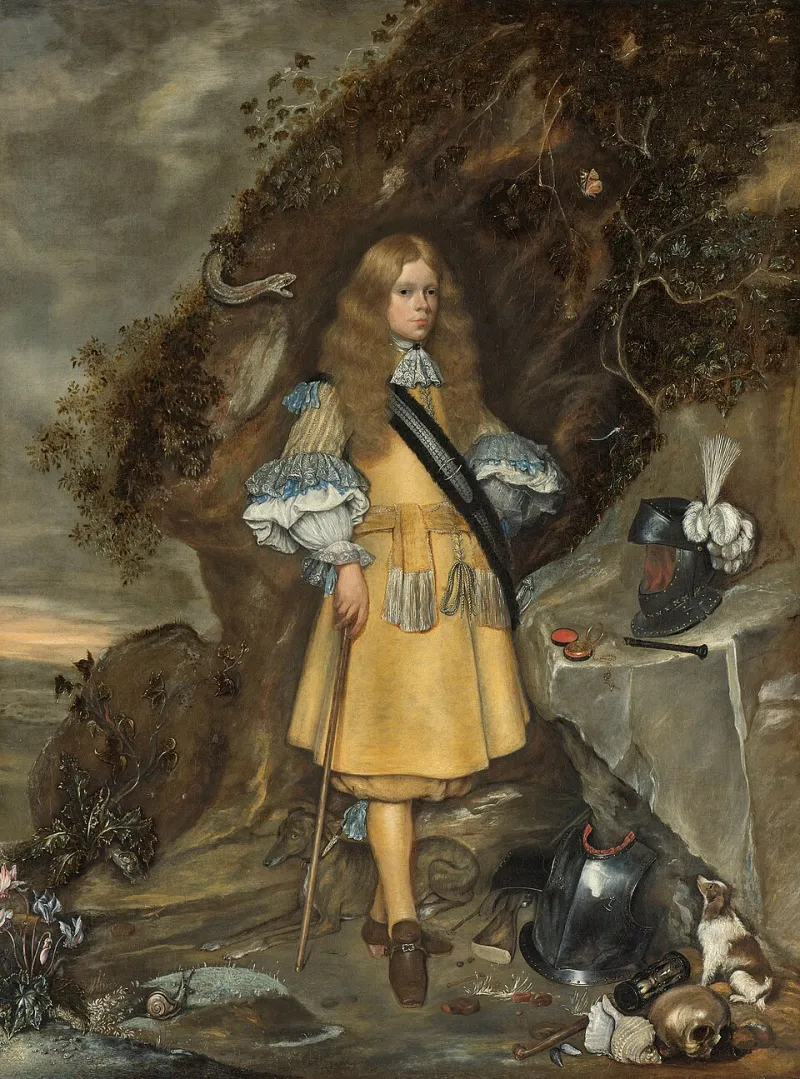
Photo: Gesina ter Borch / Gerard ter Borch, Public domain, via Wikimedia Commons
Everybody loves an underdog story. The scrappy collective of five friends making murals in a borrowed garage, running on pizza and passion — that's a story funders love to tell. And everybody loves a success story, too. The established arts nonprofit with a board of directors, a development director, and a gala every November.
What nobody seems to love? The in-between.
There's a specific kind of collective that's doing genuinely important work in American communities right now — groups that have moved past the kitchen-table phase, built real audiences, launched real programs, maybe even hired their first part-time staffer — but still can't compete for the major institutional grants that flow to established organizations. They're too big to qualify for micro-grants and too small to win the big ones. They're stuck, and the funding world mostly pretends they don't exist.
We talked to several collectives living in this limbo to find out what's actually happening, and more importantly, what's working.
The Gap Has a Name (Sort Of)
Funders and arts administrators sometimes call it the "missing middle" — that awkward developmental stage where a collective has proven its concept but hasn't yet built the institutional infrastructure that traditional grant programs reward. Annual budgets in the $80,000 to $350,000 range are a common danger zone. Too large for community foundation micro-grants, too small to absorb the administrative overhead that major government grants require.
Marcellus Webb, co-director of Ironweed Arts in Akron, Ohio, describes it this way: "We applied for a state arts council grant last year that would've been transformative for us. We got feedback that our financials looked 'unstable.' But the reason our financials look unstable is because we don't have access to the kind of multi-year support that would stabilize them. It's circular."
Ironweed runs community music programming across three neighborhoods, employs four part-time teaching artists, and serves roughly 800 participants annually. By any community impact measure, they're thriving. By grant eligibility standards, they're a liability.
Why Traditional Grants Often Don't Fit
The structure of most institutional arts funding was built around a nonprofit model that looks very different from how contemporary collectives actually operate. Traditional grants tend to reward:
- Organizational longevity — many require 3-5 years of 990 filings
- Board governance structures — formal boards with specific officer roles
- Dedicated administrative capacity — staff time to manage compliance and reporting
- Single-discipline focus — collectives that cross disciplines often don't fit neat program categories
For a collective that's interdisciplinary by design, governed by consensus rather than a traditional board, and staffed primarily by working artists wearing multiple hats, these requirements can feel like being asked to wear someone else's clothes to a job interview.
Rosicruz Vega, a founding member of Saltwater Collective in Providence, Rhode Island — a group that blends textile arts, performance, and community organizing — puts it plainly: "The application asks for our 'artistic director.' We don't have one. We have seven co-directors. That's kind of the whole point of what we do. But there's no box for that."
What's Actually Working: Three Strategies Worth Stealing
Fiscal Sponsorship as a Bridge
Fiscal sponsorship — where an established 501(c)(3) organization agrees to receive and administer funds on behalf of a project or group — has become a genuine lifeline for mid-size collectives that haven't incorporated as nonprofits or are still building their track record.
National organizations like Fractured Atlas and the New York Foundation for the Arts offer fiscal sponsorship programs, but local and regional options are often more flexible and relationship-driven. The key is finding a sponsor whose mission genuinely aligns with yours, not just one willing to take the administrative fee.
Ironweed Arts spent two years under fiscal sponsorship before incorporating, a period Webb describes as essential: "It let us apply for grants we couldn't have touched otherwise, and it bought us time to figure out what kind of organization we actually wanted to be before we locked ourselves into a legal structure."
Hybrid Revenue Stacks
The collectives surviving this middle phase are almost universally running multiple revenue streams simultaneously — and not treating any single one as the answer. A typical hybrid stack might include:
- Earned income: workshops, commissions, event fees, merchandise
- Individual giving: sustaining donor programs, crowdfunding campaigns
- Fiscal-sponsored grants: foundation and government support via a sponsor
- Partnerships: revenue-sharing or in-kind arrangements with venues, schools, or businesses
The Meridian Creative Guild in Louisville, Kentucky, which produces large-scale public art installations, has built a model where roughly 40% of their revenue comes from community workshops and 35% from individual donors — meaning grants make up less than a quarter of their budget. "We did that on purpose," says co-founder Dani Okonkwo. "We watched too many groups collapse when a major grant didn't renew. We wanted to not need any single thing to survive."
Building Funder Relationships Before You Need Them
This one sounds obvious, but the collectives that navigate the middle phase successfully tend to be the ones that started treating program officers like human beings long before they needed anything from them. Attending public funder events, submitting letters of inquiry even when you know you won't qualify yet, asking for informational meetings — these aren't just networking tactics. They're how you become visible to people who might champion you internally when something does fit.
"A program officer at a regional foundation told us directly that we weren't eligible for their main grant cycle," recalls Vega of Saltwater Collective. "But she also told us about a capacity-building fund we didn't know existed and introduced us to two other funders. That conversation was worth more than any grant we've received."
The Systemic Problem Underneath
It would be easy to frame this as a problem individual collectives can solve with enough hustle and creativity. And to some extent, the strategies above do work. But it's worth naming the bigger issue: the funding ecosystem for community arts in the US was not designed with collectives like these in mind, and the burden of adaptation falls almost entirely on the artists.
Collectives led by Black, Indigenous, and people of color face these barriers at higher rates and with less access to the informal networks that help predominantly white organizations navigate them. That's not a coincidence — it's a feature of how arts funding has historically been structured, and it's worth saying out loud.
The good news is that more funders are starting to acknowledge this. A growing number of regional foundations are experimenting with trust-based philanthropy models, general operating support grants, and multi-year commitments that don't require organizations to perform stability they haven't yet achieved.
For now, though, most mid-size collectives are still building the bridge while they're walking across it. Which, honestly, is pretty on-brand for people who make things out of nothing.
Know a collective navigating the funding middle? We want to hear their story. Reach out at flatbaycollective.org.