When the People Who Built It Start Walking Out the Door

There's a particular kind of grief that settles over a creative community when its founder quietly disappears. Not dramatically — no big announcement, no going-away party. Just a slow fade. Fewer emails returned. Meetings attended by proxy. Then one day someone new asks, "Wait, who started this whole thing?" and the answer is a name nobody's seen in months.
It happens more than anyone in the arts community likes to admit. And it almost never comes down to one bad day.
The Weight Nobody Talks About
Founders of artist collectives tend to carry what researchers and community organizers call invisible labor — the emotional, administrative, and relational work that keeps a group functioning but never shows up on a résumé or a project timeline. They remember who had a falling out with whom. They know which grant application deadline is lurking in six weeks. They field the late-night texts from the member who's spiraling before a big show.
This isn't just busy-ness. It's a specific kind of cognitive and emotional load that compounds over time. Add in the decision fatigue that comes from being the de facto final word on everything from budget approvals to whether the collective's Instagram should post on Sundays, and you've got a recipe for someone who looks fine on the outside but is running on fumes.
"I loved what we built," said one co-founder of a mid-sized printmaking collective in Portland, Oregon, who stepped back after four years. "But I also couldn't remember the last time I made anything myself. I was so busy holding the container that I forgot I was supposed to be an artist."
That tension — between stewardship and creative practice — is one of the most underexamined fault lines in the collective model.
Warning Signs That a Leader Is Heading for the Door
Before someone formally exits, there are almost always signals. Learning to read them early is one of the most valuable skills a collective can develop.
Watch for withdrawal from informal spaces — when the person who used to linger after meetings starts leaving early, or stops showing up to the casual hangouts entirely. Social disengagement often precedes formal disengagement by months.
Pay attention to shrinking creative output. Founders who stop making work are often founders who've stopped feeling like artists. That identity erosion is serious.
Notice defensive communication patterns — when questions that used to spark enthusiasm now generate clipped responses or visible frustration. This often signals that someone has been carrying unspoken resentment for longer than anyone realized.
And watch for the over-delegation spiral, where a leader starts handing off everything, not because they're building capacity, but because they've mentally already left.
What Actually Works: Structural Solutions, Not Pep Talks
Here's the thing about burnout in creative communities: you can't care your way out of a structural problem. Telling a burned-out founder that the collective appreciates them is kind, but it doesn't change the conditions that got them there.
Collectives that successfully retain their founding energy tend to make concrete, institutional changes — not just cultural ones.
Rotating leadership roles are one of the most effective interventions. When one person isn't permanently "the one who handles it," the cognitive load gets distributed. This isn't about term limits for their own sake — it's about building a culture where leadership is something you step into and step out of, rather than a permanent identity you're either holding or abandoning.
The Eastside Arts Alliance in Los Angeles has used a rotating stewardship model for years, where different members take on a "lead facilitator" role for specific projects or seasons. Founders stay involved without staying responsible for everything. The result? Several original members who've been active for over a decade without burning out.
Formal sabbaticals are still rare in grassroots arts communities, but the collectives that offer them swear by them. Even a three-month break from organizational responsibilities — with guaranteed return and no loss of standing — can be enough to let someone remember why they cared in the first place. The key is normalizing the sabbatical before anyone needs it, so taking one doesn't feel like a failure or a goodbye.
Separating creative roles from administrative ones sounds obvious, but it's genuinely hard to implement when resources are tight. Still, even partial separation matters. If a founder is also doing the bookkeeping, the grant writing, and the community outreach, there's no space left for the actual art. Identifying even one or two tasks that can be delegated — or, better yet, assigned to someone who actually enjoys them — can meaningfully shift the balance.
Making Space for the Conversation
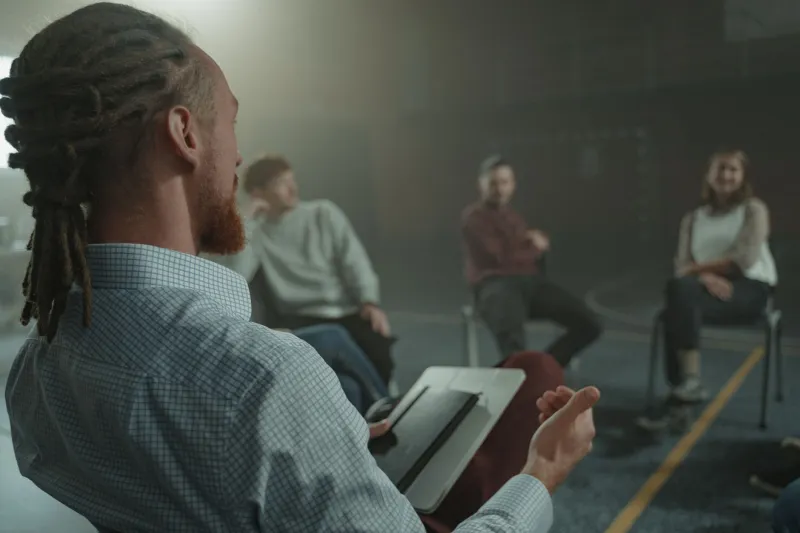
One of the quieter reforms that high-retention collectives make is building regular check-in structures that aren't about the work. Not "how's the mural project going" but "how are you going."
This sounds soft, but it's strategic. When leaders have a legitimate, low-stakes venue to say "I'm stretched too thin" before they hit a wall, collectives can respond proactively rather than scrambling after someone's already halfway out.
Some groups have introduced what they call "sustainability check-ins" — brief, semi-annual conversations where every member, including founders, reflects on their bandwidth and their relationship to the collective. It destigmatizes the idea of needing less, which makes it far more likely that people will ask for less before they need to walk away entirely.
The Deeper Question
There's something worth sitting with here that goes beyond retention tactics. A lot of collectives were built on the assumption that passion is an infinite resource — that if you love what you're doing, you won't run out. That assumption is wrong, and it's done a lot of damage to a lot of remarkable people.
The collectives that last aren't the ones with the most passionate founders. They're the ones that treat their people — especially the ones who've given the most — as finite, valuable, and deserving of care.
Keeping a founder in the room isn't about flattery or titles. It's about building something worth staying for: a structure that shares the load, honors the whole person, and makes room for the art that started everything in the first place.
Because when the people who built it start walking out the door, it's rarely because they stopped loving it. It's usually because nobody made it easy enough to stay.